The Shifting Global Order - U.S. Influence at a Crossroads Amid Rising Conflict Risks
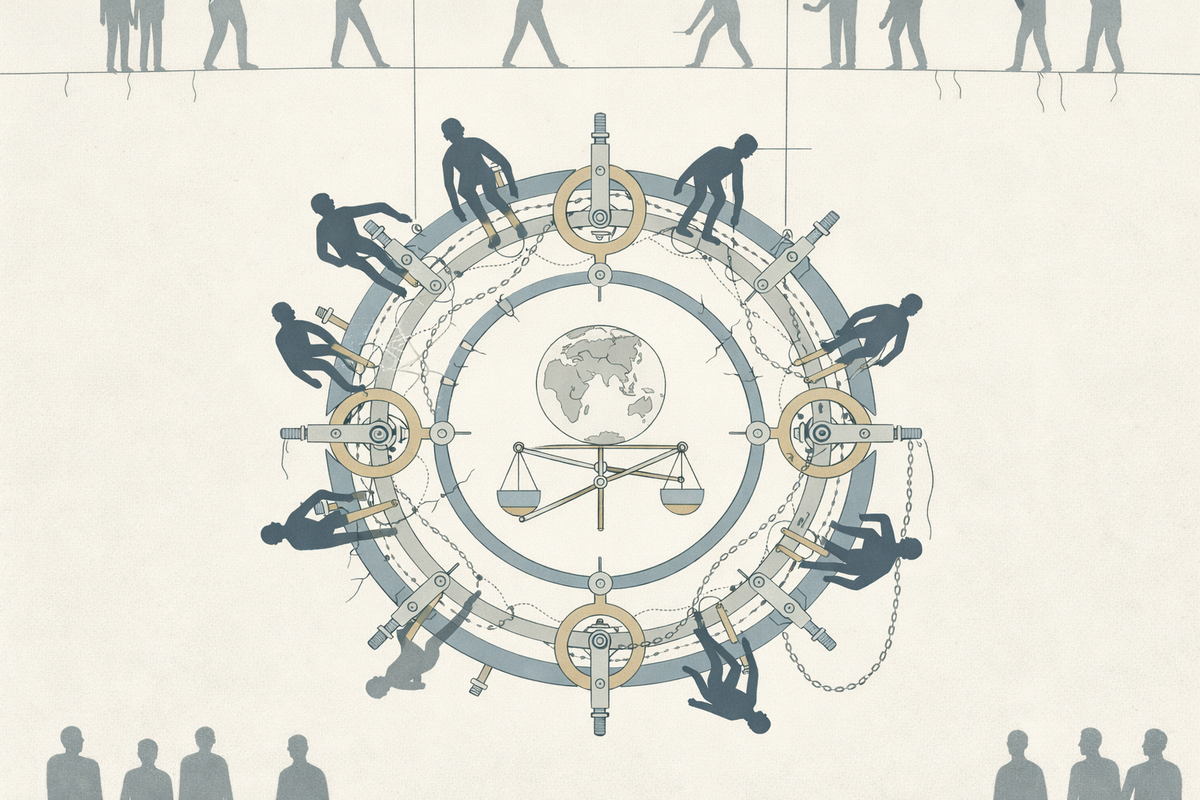
The global order has not collapsed, but it is thinning. Power no longer organizes around a single hegemon or stable blocs. As states act independently within shared systems, structural strain grows and the risk of miscalculation rises.
By Edward Miranda - December 2024
For long stretches of history, people living through great transitions rarely recognized them as such. Stability did not vanish all at once. It thinned. Familiar structures continued to function, even as the assumptions beneath them quietly eroded. By the time uncertainty became undeniable, the forces reshaping the world were already irreversible. The global order is now in such a moment.
For nearly eight decades, international stability rested on an architecture shaped by American power, economic integration, and shared rules. That system has not collapsed, but it is losing coherence. As power diffuses and rivalry intensifies, history suggests that the most likely outcome is not peace or catastrophe, but a prolonged era of fragmentation, proxy conflict, and heightened risk, an era in which miscalculation becomes more dangerous than intent.
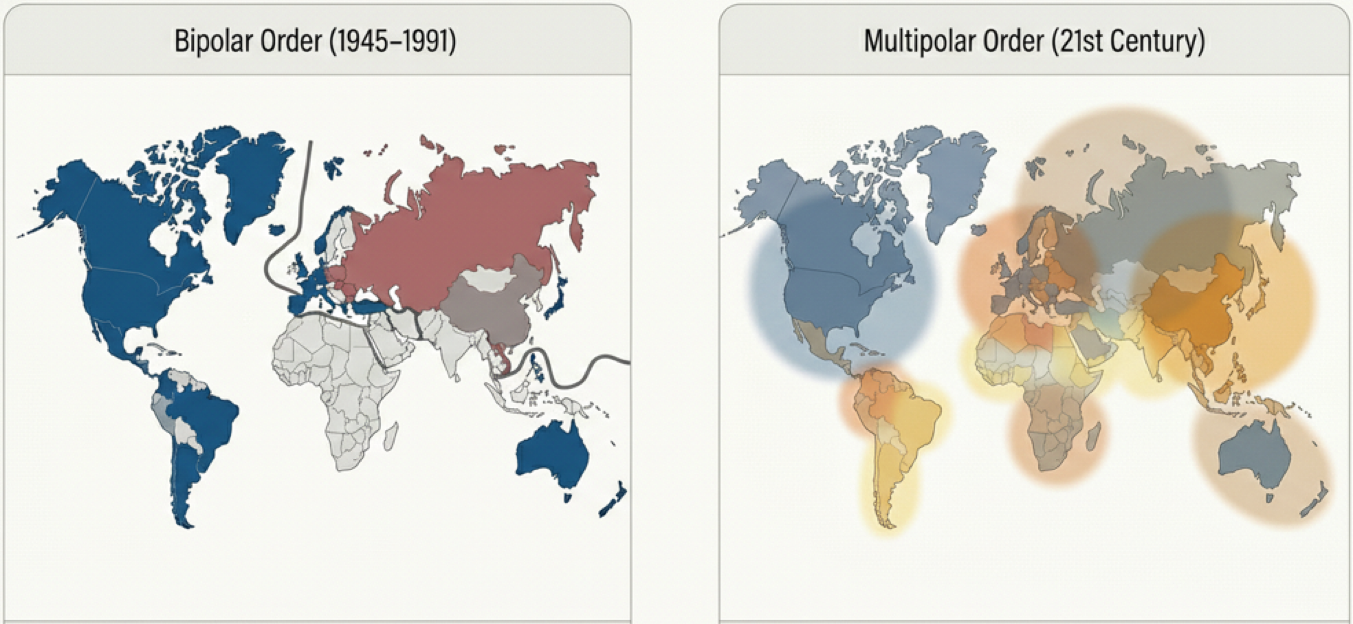
The Bipolar World Order (1944-1991)
In the aftermath of the Second World War, the global system did not dissolve into chaos. It hardened into structure. Power consolidated around two poles, each defined by a coherent ideology, a clear alliance network, and a shared understanding of the stakes involved.
The United States and its allies advanced a vision rooted in market capitalism, political pluralism, and institutional cooperation. Across the divide, the Soviet Union organized a competing bloc built on centralized economic control, ideological uniformity, and state authority. These visions were not merely economic models. They were comprehensive claims about how societies should be ordered, how power should be exercised, and what legitimacy meant. The rivalry that followed was intense, but it was also bounded.
Conflict during the Cold War rarely stemmed from ambiguity about who stood where. Alliances were rigid. Lines were visible. States knew which camp they belonged to and what crossing those lines would entail. Proxy wars erupted across Asia, Africa, and Latin America, yet the core adversaries exercised restraint when it mattered most. The destructive potential of direct confrontation, amplified by nuclear weapons, imposed a grim but effective discipline on decision-making.
This balance produced a form of negative stability. The threat of annihilation constrained escalation. Military postures, diplomatic signals, and red lines were studied obsessively. Even moments of extreme tension, such as the Cuban Missile Crisis, ultimately reinforced the logic of caution. The system rewarded predictability over improvisation.
Equally important, the bipolar order reduced strategic uncertainty. Smaller states aligned for protection, sometimes willingly, sometimes under pressure, but alignment itself simplified the global map. Power flowed through two centers. Influence was contested, but the structure of competition remained constant.
When the Soviet Union collapsed in 1991, the bipolar system vanished almost overnight. The United States emerged as the world’s sole superpower, inheriting not only unmatched military and economic strength, but also responsibility for maintaining the global order those rivalries had once constrained.
In retrospect, the Cold War was dangerous, but legible. Its rules were understood, its boundaries enforced, and its risks calculated. The world that followed would prove less rigid, more fluid, and ultimately more unpredictable. That difference matters now.
The stability of the bipolar world did not arise from harmony, but from clarity. Power was concentrated, alliances were fixed, and escalation pathways were broadly understood, even when tensions ran high. Today’s emerging order lacks those simplifying constraints. Influence is dispersed across multiple centers, alliances are fluid, and interests overlap without alignment. Where the Cold War imposed discipline through structure, the current system invites experimentation without guardrails. The danger now is not that conflict will erupt along a single, predictable fault line, but that fragmentation itself will generate miscalculation as actors test limits in a world where boundaries are no longer universally recognized.
The Era of Globalization Hidden Fractures (1990’-2000’s)
For three decades after the Cold War, globalization was treated less as a policy choice and more as an inevitability. Trade liberalization, capital mobility, and supply-chain integration were framed as natural extensions of economic progress. Nations did not merely participate, they optimized themselves around it.
The logic was compelling. Specialization would maximize efficiency. Comparative advantage would raise global output. Technology would erase distance. Consumers would benefit from lower prices, while emerging economies would industrialize at unprecedented speed.
1. In aggregate, this vision succeeded.
2. In distribution, it fractured societies.
Manufacturing did not disappear evenly. It concentrated losses geographically and demographically. Entire regions built around industrial labor found themselves bypassed by capital and innovation. Employment shifted toward services and finance, sectors that rewarded education and urban proximity. Wages for non-college workers stagnated even as corporate profits rose. These were not abstract adjustments. They reshaped communities.
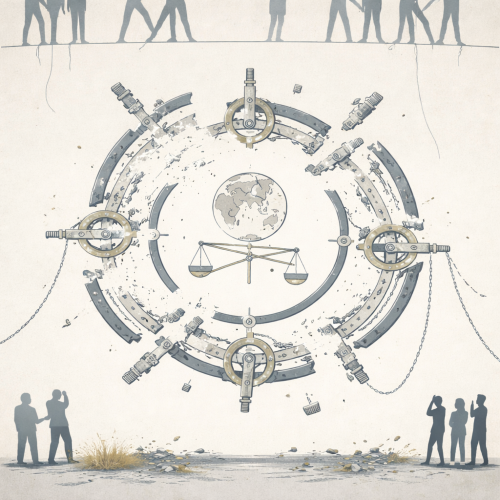
Local tax bases eroded. Social mobility stalled. Families that had once relied on stable industrial work entered cycles of precarity. What economists labeled “creative destruction” often felt, on the ground, like destruction without replacement.
At the same time, globalization amplified inequality within advanced economies. Capital became more mobile than labor. Returns to ownership outpaced returns to work. Global supply chains rewarded scale, leaving small firms and local producers increasingly exposed. Productivity gains accrued upward, while risk was distributed downward. Governments underestimated the political consequences of this imbalance.
Safety nets lagged behind structural change. Retraining programs were underfunded and misaligned with labor-market realities. Cultural identity became entangled with economic loss. Regions left behind did not simply lose income, they lost status, influence, and voice. Globalization, once marketed as a shared project, came to be seen as an elite bargain.
This perception mattered more than statistics. As trust in institutions eroded, economic grievances fused with cultural and national identity. Open borders for capital were reinterpreted as closed doors for citizens. International agreements came to symbolize constraint rather than cooperation. What had been framed as mutual interdependence was recast as vulnerability. The political response followed predictably.
Economic nationalism did not arise from ignorance of trade theory. It arose from lived asymmetry. Voters who bore the costs of globalization without sharing in its gains rejected appeals to aggregate prosperity. Populist movements gained traction not by opposing markets outright, but by opposing a system perceived as rigged, distant, and indifferent. The result was not a rejection of global trade, but a demand to renegotiate its terms.
By the late 2010s, this backlash reshaped policy. Tariffs returned. Supply chains were scrutinized through national security lenses. Strategic industries were identified and protected. Efficiency gave way to resilience. Cost minimization yielded to redundancy. Globalization did not end. It splintered.
What emerged was selective integration, trade where it served national interests, decoupling where it did not, and competition where cooperation once prevailed. Economic interdependence, once assumed to be stabilizing, became a source of strategic anxiety.
These fracture lines now define the global economy. They explain why trade is increasingly political, why alliances are transactional, and why trust between nations has eroded even as commerce continues.
1. Globalization created prosperity.
2. Its uneven distribution created instability.
And it is that instability, not ideology, that now drives the restructuring of the global order.
Concrete Fracture Lines in Practice
1. Industrial Hollowing and the Geography of Loss
In the United States and much of Western Europe, globalization did not merely shift jobs, it reordered economic geography. Manufacturing declined fastest in regions built around a single industrial identity, steel towns, auto corridors, textile centers. These regions did not transition smoothly into the knowledge economy. Capital and talent flowed toward metropolitan hubs, leaving smaller cities and rural areas structurally disadvantaged.
The result was a spatial divide that persists today. Prosperity clustered in global cities tied to finance, technology, and services, while former industrial regions experienced declining investment, population loss, and weakened civic institutions. This geographic concentration of loss explains why economic resentment aligned so strongly with place, not just income or education. Globalization did not fail everywhere. It failed somewhere, consistently and visibly.
2. Inequality, Capital Mobility, and Political Trust
Globalization altered the balance of power between labor and capital. Capital became global, mobile, and lightly constrained. Labor remained local, regulated, and exposed. This asymmetry shifted income distribution upward, even as overall productivity increased.
For many households, the promise of rising tides lifting all boats never materialized. Wages lagged productivity. Job security declined. Meanwhile, corporate profits and asset values surged, reinforcing the perception that globalization primarily benefited investors, executives, and financial institutions.
Over time, this economic divergence translated into political erosion. Institutions that promoted free trade and global integration lost credibility among voters who experienced stagnation rather than opportunity. Trust did not erode because globalization was complex. It eroded because outcomes felt predictably unequal.
3. From Economic Interdependence to Strategic Vulnerability
Globalization was once believed to reduce conflict by binding nations together through trade. In practice, extreme interdependence created new points of leverage and exposure. Long supply chains optimized for cost proved fragile under stress, pandemics, wars, sanctions, and political shocks.
As vulnerabilities surfaced, governments reclassified economic dependencies as security risks. Semiconductors, energy, food, pharmaceuticals, and rare earth minerals moved from commercial categories into strategic ones. Trade policy became inseparable from national defense.
This shift fundamentally altered how globalization is perceived. Interdependence no longer guarantees stability. It can amplify coercion. As a result, nations now pursue selective decoupling, redundancy, and domestic capacity, even at the cost of efficiency. The global economy continues to function, but under a logic of managed exposure rather than mutual trust.
The cumulative effect of these fracture lines was not merely economic discontent but a deeper erosion of shared assumptions. As globalization lost its legitimacy at home, it also lost coherence abroad. Governments that once defended open systems began to prioritize sovereignty over coordination, leverage over leadership. Trust in institutions weakened, alliances became conditional, and rules once treated as neutral infrastructure were increasingly used as instruments of power. In this environment, authority persisted without consensus, and influence without agreement proved brittle. The global order did not fail all at once, it slipped into a phase where power remained concentrated, but acceptance no longer followed.
Why This Matters for the Global Order
These fracture lines explain why globalization no longer acts as a stabilizing force. They show how economic integration, absent political and social alignment, can undermine cohesion rather than reinforce it.
1) The global order did not fracture because nations rejected trade.
2) It fractured because trade reshaped societies faster than institutions could adapt.
That unresolved tension now drives nationalism, protectionism, and geopolitical competition, not as ideology, but as response.
Power Without Consensus
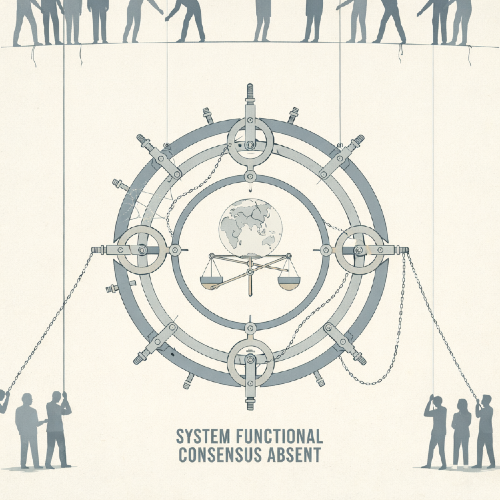
The erosion of globalization did not strip the United States of power. It stripped power of its quiet legitimacy.
For much of the post-war period, American influence functioned through systems that appeared neutral even to those constrained by them. Financial infrastructure, trade regimes, security guarantees, and diplomatic institutions were widely accepted as the operating environment of global life. Compliance often felt voluntary because the rules themselves were perceived as broadly fair, stable, and predictable. Power was real, but it rarely needed to announce itself. That condition no longer holds.
As domestic support for globalization fractured, the international order built upon it lost coherence. Rules that once felt procedural now feel political. Enforcement mechanisms once viewed as technical are increasingly interpreted as selective. Authority persists, but it no longer carries universal acceptance. Every assertion of power is scrutinized for intent. Every rule is evaluated not only for consistency, but for advantage.
In the absence of shared consensus, influence has shifted from leadership toward leverage. Access to markets, capital, supply chains, and security arrangements is no longer simply a benefit of participation, but a conditional instrument of pressure. This strategy remains effective in the short term, yet it carries a structural cost. Each act of coercion encourages circumvention. Each restriction accelerates diversification. Systems designed for integration begin to fragment under the weight of enforcement.
Over time, this dynamic produces a paradoxical order. Power remains concentrated, yet alignment weakens. Authority is extensive, but legitimacy narrows. Rivals comply where necessary, but adapt relentlessly. Partners cooperate but hedge their commitments. The system continues to function, but without the shared assumptions that once absorbed shocks and moderated rivalry.
Alliances endure, though their character has changed. Long-term alignment increasingly gives way to transactional calculation. Cooperation is measured against immediate interests rather than enduring principles. Trust becomes provisional. Flexibility is prized over commitment. In moments of crisis, this brittleness matters. Coordination slows precisely when speed is required. Miscalculation becomes easier. Escalation becomes harder to control.
Power without consensus is not chaos, but it is inherently unstable. It demands constant assertion rather than quiet acceptance. History suggests such systems can persist for a time, but only at rising cost. Eventually, the effort required to maintain authority begins to outweigh the willingness to sustain it.
This is the condition now shaping the global order, an era not defined by the absence of power, but by the absence of agreement about how that power should be used.
China occupies the most consequential position within this emerging landscape, not merely because of its scale, but because of its intent. Unlike past rising powers that sought inclusion within an existing order, China increasingly seeks insulation from it. Its strategy reflects a long-term assessment that dependence on Western-controlled systems represents a structural vulnerability. Economic integration remains valuable, but only on terms that preserve autonomy. Industrial policy, technological self-sufficiency, and regional influence are pursued not as temporary measures, but as pillars of national security. The result is a form of participation without reliance, engagement without deference. China does not aim to overthrow the global system outright. It aims to render itself unexposed to its pressure.
India’s rise follows a markedly different trajectory. Where China emphasizes central coordination and strategic insulation, India advances through demographic momentum, internal market scale, and calibrated non-alignment. Its power grows less through confrontation than through accumulation. India benefits from fragmentation without actively accelerating it, positioning itself as a flexible partner rather than a rigid pole. Strategic autonomy remains a guiding principle. Alliances are entered selectively. Commitments are hedged. This posture allows India to extract advantage from multiple directions while avoiding entanglement in binary rivalries. In a fragmented order, such optionality becomes a form of strength.
Russia occupies a different role within this fragmented order, not as a rising center of integration, but as a force of disruption. Its influence does not stem from economic gravity or technological leadership, but from its willingness to exploit fault lines within the system. Russia operates most effectively where institutions are weakest and norms are contested. Military intervention, energy leverage, cyber operations, and information warfare are used not to build an alternative order, but to degrade confidence in the existing one. This strategy trades long-term growth for immediate leverage. Russia does not seek to anchor the global system. It seeks to ensure that no single framework becomes stable enough to constrain its freedom of action.
Alongside these major powers, regional blocs increasingly function as both stabilizers and limiters within the emerging order. The European Union, despite internal divisions, remains committed to rule-based coordination, regulatory power, and economic integration as tools of influence. Its strength lies not in force projection, but in norm-setting, market access, and institutional gravity. ASEAN plays a quieter but no less significant role, emphasizing balance, neutrality, and regional cohesion amid intensifying great-power competition. These blocs do not replace global leadership, but they soften its absence. By absorbing pressure, mediating rivalry, and preserving localized cooperation, regional groupings help prevent fragmentation from tipping into systemic collapse, even as they acknowledge that the era of centralized global authority has passed.
This diffusion of power does not reduce danger, it redistributes it. In a system of multiple centers, rivalry becomes less predictable, deterrence more complex, and responsibility more diffuse. No single actor controls escalation, yet each possesses the capacity to trigger it. Overlapping interests, regional flashpoints, and misaligned incentives increase the likelihood that conflict emerges not from deliberate aggression, but from error, misreading, or unintended consequence. History suggests that such environments are most volatile not at moments of open hostility, but during periods of strategic uncertainty, when actors test limits without fully understanding where those limits lie. The risk facing the global order today is not the presence of competing powers, but the absence of a shared framework capable of restraining them.
Rising Nationalism and the Return of Protectionism (2010s–Present)
By the 2010s, the political backlash against globalization had hardened into a governing force. What began as economic unease evolved into a broader rejection of the assumptions that had underpinned the post–Cold War order. Global integration, once treated as an unquestioned good, came to be seen as a source of vulnerability, a system that diluted sovereignty, rewarded distant elites, and left national governments constrained in moments of crisis.
In the United States, this shift found its clearest expression in the election of Donald Trump in 2016. “America First” was not merely a campaign slogan, but a diagnosis of perceived imbalance. Trade agreements were recast as zero-sum arrangements. Multilateral institutions were framed as limits on national freedom of action. Tariffs, renegotiated deals, and resource-driven strategies were presented as tools to restore leverage and correct decades of perceived decline.
President Trump’s return to office following the November 2024 election signals not a reversal, but an acceleration of an already established direction. The policies associated with his first administration are likely to reappear with fewer internal constraints and greater institutional confidence. Tariffs, transactional diplomacy, and unilateral leverage are no longer treated as temporary disruptions, but as durable features of American statecraft. This shift matters less for its political symbolism than for its strategic consequences. Repeated reliance on economic pressure encourages allies and competitors alike to reassess the risks of dependence on the United States itself. Diversification, once a hedging strategy, becomes a structural imperative. In such an environment, states do not merely plan for policy swings, they reconfigure relationships to reduce exposure to American leverage altogether.
Similar dynamics unfolded across much of the developed world. In Europe, nationalist movements gained strength by arguing that economic integration had outpaced democratic consent. Open borders, regulatory harmonization, and shared governance were increasingly portrayed as threats to cultural cohesion and economic security. In each case, nationalism promised something deceptively simple: control in an era of complexity.
History suggests why such movements gain traction, and why they often disappoint.
Periods of rapid economic transformation tend to produce winners and losers unevenly. When adjustment feels permanent rather than transitional, political pressure builds. Nationalism thrives in these moments because it offers clarity, agency, and blame. Yet past episodes reveal a recurring pattern. Protectionist measures may signal resolve, but they rarely deliver the scale of restoration promised. Industries adapt globally rather than returning home. Costs rise before benefits appear. Retaliation replaces cooperation.
The interwar period provides a cautionary example. The Smoot–Hawley Tariff Act was intended to shield American workers and industries during economic distress, but instead provoked retaliatory tariffs, collapsed trade flows, and deepened the global downturn. Across Europe, economic nationalism fractured cooperation and hardened rivalries, contributing to a climate in which political extremism and strategic confrontation flourished. These policies did not fail because grievances were imagined, but because insulation proved incapable of producing stability in an interconnected world.
Modern nationalism follows a similar trajectory. Initial actions can feel empowering, signaling independence and resolve. Over time, however, expectations collide with reality. Supply chains adjust rather than reverse. Allies grow cautious. Economic gains arrive slowly, if at all. As promised outcomes fail to materialize, frustration intensifies, and rhetoric hardens further.
More consequentially, nationalism alters how power is exercised. Cooperation becomes conditional. Institutions are treated as instruments rather than forums. Economic tools are increasingly deployed not only to protect domestic interests, but to pressure adversaries and compel compliance. In this environment, finance and currency move from the background of global stability to the foreground of strategic competition.
It is here that economic nationalism converges with a more consequential shift: the growing use of monetary and financial systems as tools of geopolitical leverage, a development that carries profound implications for the future role of the U.S. dollar and the stability of the global financial order.
The Threat to the U.S. Dollar’s Global Role
For most Americans, the global role of the dollar is largely invisible. It does not feel like power. It feels like normalcy. Prices are quoted in dollars. Debt is issued in dollars. Trade is settled in dollars. This familiarity obscures a critical truth: no single asset underpins American influence more than the dollar’s position at the center of the global financial system.
Since the post–World War II settlement, the U.S. dollar has functioned as the world’s primary reserve currency and the backbone of global trade and finance. This status has granted the United States an extraordinary privilege. It can borrow in its own currency at unmatched scale and low cost. It can sustain persistent deficits without triggering immediate capital flight. It can finance wars, social programs, crises, and consumption by issuing liabilities the rest of the world willingly absorbs.
In effect, the United States has been able to “print” money and exchange it for real goods, services, and resources, not because of coercion, but because of trust. Global actors accept dollars because they believe the system is stable, liquid, and ultimately preferable to the alternatives. That trust is the foundation. And it is not guaranteed.
Over the past two decades, the United States has increasingly treated its financial infrastructure not merely as neutral plumbing for global commerce, but as an instrument of state power. Sanctions enforced through dollar-clearing systems, restrictions on global banks, and the freezing of sovereign reserves have proven effective tools of pressure. Yet effectiveness has come at a cost. These actions have made explicit what was once implicit: reliance on the dollar entails political exposure to U.S. decisions.
Rivals have responded rationally. Russia, China, Iran, and others have accelerated efforts to reduce their vulnerability by settling trade in local currencies, building alternative payment systems, and developing parallel financial channels. China’s promotion of the yuan through trade agreements and development financing reflects a long-term strategy of insulation rather than imminent replacement. The objective is not to dethrone the dollar overnight, but to ensure that access to global finance cannot be unilaterally denied.
Even among allies, diversification has become a matter of prudence rather than protest. Trade disputes, protectionist signals, and sharp political swings within the United States have introduced uncertainty about the durability of American leadership. The result is not abandonment of the dollar, but experimentation around its edges. And that distinction matters. Reserve currencies rarely fall because they are rejected. They erode because they become optional.
The most plausible future is not a world without the dollar, but a world in which the dollar is one currency among several. A multipolar currency system, whether formalized or de facto, would fundamentally alter the United States’ economic position. Monetary flexibility would narrow. Deficits would carry faster consequences. Borrowing costs would rise. Fiscal choices once deferred would become unavoidable.
The geopolitical implications would be equally profound. Financial sanctions would lose unilateral force. Economic coercion would require coalitions rather than commands. The ability to shape global financial rules would weaken as alternatives gained credibility. American power would remain significant, but more constrained, more conditional, and more sensitive to miscalculation.
History offers a quiet warning here. Britain did not lose sterling’s global role through sudden collapse, nor because it ceased to be a major power. Sterling declined gradually as the costs of empire mounted, debts accumulated, and confidence shifted toward a rising alternative. Even as London remained a financial center and Britain retained influence, the loss of reserve currency status imposed lasting constraints. Strategic reach narrowed. Fiscal flexibility diminished. Once the transition was underway, reversal proved impossible.
The danger facing the United States is not an abrupt dollar crisis. It is normalization. A slow movement from exceptional privilege to ordinary constraint. Such a shift would not announce itself with panic, but it would reshape every dimension of American power over time.
As financial dominance becomes less certain, competition shifts to other arenas where leverage can still be established. Technology, supply chains, data, energy systems, and critical infrastructure increasingly serve as the new currencies of power. In a world where money no longer guarantees control, nations seek advantage where dependence can still be shaped, and where tomorrow’s order will be decided not only by armies and alliances, but by code, chips, and control over the systems that bind the modern world together.
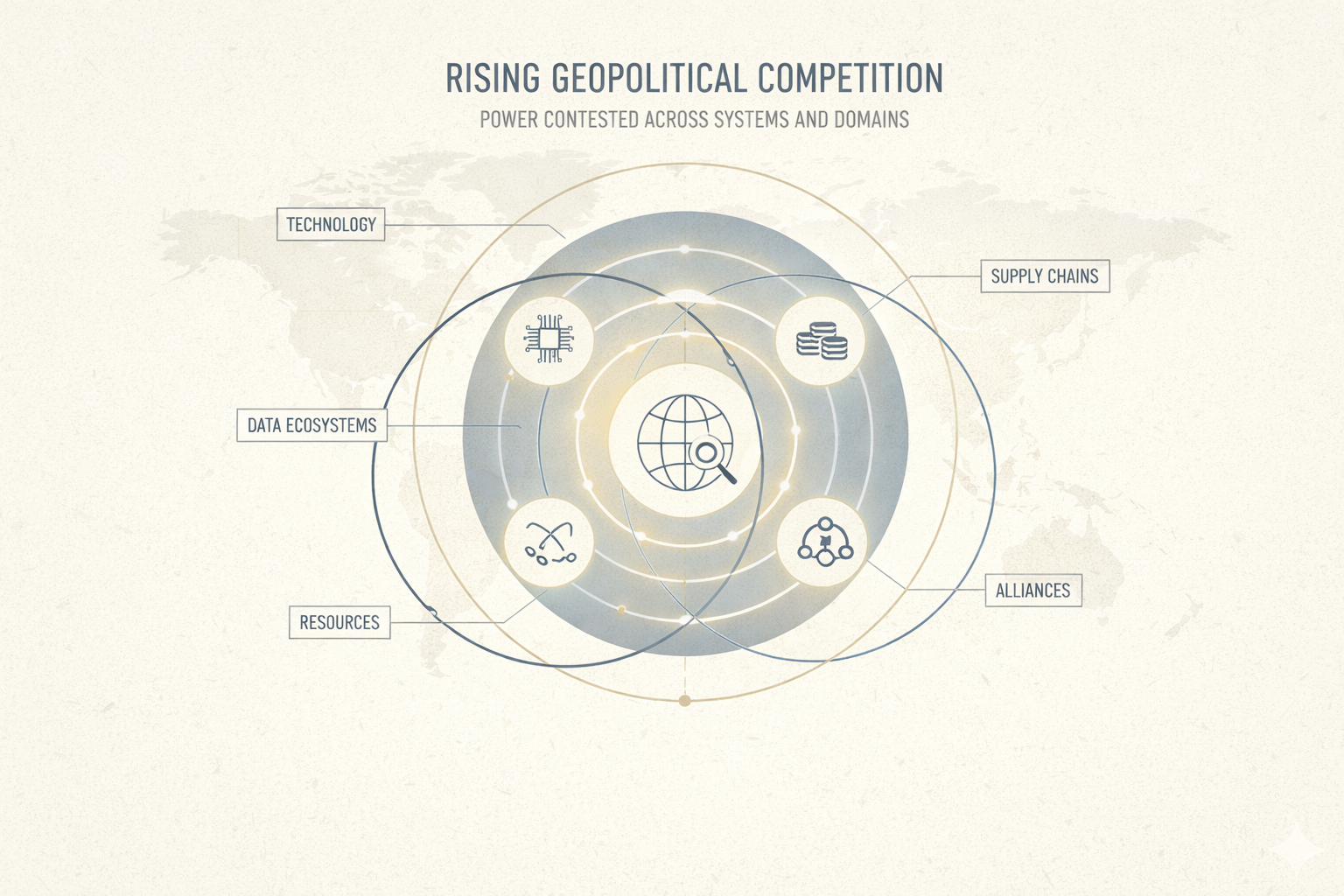
Rising Geopolitical Competition
As American dominance becomes less absolute, global competition has not diminished. It has widened in scope, multiplied its arenas, and drawn in a greater number of consequential actors. Power is no longer contested primarily through ideology or military parity alone, but through control of the systems that determine long-term advantage. The result is a more crowded and unstable landscape, where rivalry unfolds simultaneously across technology, resources, and alliances.
Technology has become the central terrain of this competition because it shapes all others. Control over artificial intelligence, advanced semiconductors, telecommunications infrastructure, and data ecosystems now determines not only economic productivity, but military capability, surveillance capacity, and social influence. These technologies are not confined to defense sectors. They are embedded in civilian life, financial systems, logistics networks, and governance itself. As a result, technological dominance confers leverage that is continuous rather than episodic.
History offers a useful parallel. In the nineteenth century, the industrial revolution reshaped global power not through a single invention, but through the integration of manufacturing, energy, transportation, and finance. Britain’s early dominance rested not merely on factories, but on its ability to set standards, control trade routes, and finance global commerce. Naval power followed industrial capacity, not the reverse. Today’s technological race operates under a similar logic. States that control foundational technologies do not simply outcompete rivals, they define the environment in which competition occurs. Standards, supply chains, and dependencies follow innovation, locking in advantage over time.
This is why technological rivalry has become so intense. Export controls, industrial subsidies, talent restrictions, and strategic decoupling are not temporary measures. They are attempts to prevent dependency in systems that will determine power for decades. Unlike traditional arms races, technological competition is cumulative. Falling behind is not easily corrected, and catching up requires not only investment, but access to ecosystems others may deny.
Alongside technology, competition for physical resources has reasserted itself as a strategic concern. Advanced manufacturing and energy transitions have increased reliance on rare earth minerals, lithium, and other inputs concentrated in a small number of regions. Energy security remains central to national planning, while water scarcity increasingly shapes regional stability. These pressures elevate the importance of contested geographies such as the South China Sea and the Arctic, where access routes, resource claims, and military presence converge. Resource competition rarely presents itself as open conflict, but it steadily militarizes space and hardens strategic assumptions.
As rivalry intensifies across these domains, alliances are also evolving. States are no longer relying exclusively on global institutions to manage competition. Instead, they are forming regional, issue-specific, and interest-based coalitions designed to provide flexibility and insulation. Trade blocs, regulatory groupings, and security partnerships increasingly operate alongside or outside U.S.-centric frameworks. This does not signal the collapse of existing institutions, but their dilution. Influence becomes more distributed. Rule-setting becomes contested. Coordination becomes conditional.
Taken together, these dynamics define a new phase of geopolitical competition. It is not organized around a single axis or a binary divide, but around overlapping contests across multiple systems. Power accumulates incrementally rather than decisively. Stability depends less on deterrence alone and more on the management of interdependence, miscalculation, and escalation within deeply intertwined yet politically fragmented structures.
This environment leaves little room for error. When competition spans technology, resources, and alliances simultaneously, misunderstandings propagate faster and restraint becomes harder to sustain. History suggests that such periods are not dangerous because conflict is inevitable, but because the pathways to conflict multiply while the mechanisms for preventing it weaken.
That pattern raises an unavoidable question, one that has confronted every era of major power transition: whether rivalry can be managed without catastrophe, or whether the pressures inherent in systemic change ultimately overwhelm restraint.
Lessons from History: Is Conflict Inevitable?
History does not argue that war is unavoidable, but it does warn that major power transitions are rarely peaceful. When rising powers challenge established ones, the resulting tension often reshapes incentives in ways leaders do not fully control. Fear hardens perceptions. Defensive actions are interpreted as aggression. Miscalculation becomes more likely precisely when restraint is most needed.
Across recorded history, this pattern appears with unsettling consistency. In twelve of sixteen major power transitions examined by historians, rivalry between a dominant power and a rising challenger ended in large-scale war. This dynamic, often described as the Thucydides Trap, does not claim that conflict is predetermined, but it highlights how structural pressure narrows the margin for error. War emerges not from desire, but from accumulated mistrust and cascading mistakes.
There are exceptions. The transition of global leadership from Britain to the United States in the early twentieth century avoided direct conflict between the two powers. That outcome was unusual, and conditional. It depended on shared cultural foundations, overlapping political values, deep economic integration, and a gradual transfer of influence rather than abrupt displacement. Even then, Britain’s decline imposed lasting constraints, and global stability was not preserved elsewhere. Peaceful transitions are possible, but historically uncommon.
The present moment lacks many of those stabilizing conditions. Rival powers today do not share institutional alignment, ideological consensus, or deep trust. Economic integration exists, but increasingly as leverage rather than assurance. These factors shape what comes next.
Probabilities for Future Scenarios
When historical precedent is combined with current geopolitical trajectories, three broad outcomes emerge, not as predictions, but as probabilistic paths shaped by structural forces.
The least likely outcome is peaceful adaptation. In this scenario, the United States and China manage rivalry through sustained diplomacy, selective cooperation, and institutional reform. Regional alliances help absorb pressure rather than amplify it, and economic ties are rebalanced rather than severed. History suggests this outcome carries roughly a 20 percent probability, reflecting how rare such transitions have been under comparable conditions.
The most likely trajectory is prolonged economic fragmentation accompanied by proxy conflict. Trade disputes intensify. Supply chains regionalize. Competition over technology and resources hardens strategic postures. Conflicts remain regional rather than global, but persistent and destabilizing. This path reflects the default behavior of rival powers seeking advantage while avoiding direct confrontation. Based on historical patterns, this outcome carries approximately a 50 percent probability.
The most dangerous scenario is major global conflict triggered by miscalculation. Flashpoints such as Taiwan, the South China Sea, or the Arctic combine military presence, national identity, and strategic signaling in ways that magnify risk. In such environments, accidents, misread intentions, or political misjudgments can escalate faster than diplomacy can respond. History suggests this outcome, while not inevitable, carries a substantial 30 percent probability, far too high to dismiss.
These scenarios are not mutually exclusive. Elements of fragmentation, proxy conflict, and escalation can coexist, reinforcing one another over time.
Preventing Future Conflict
Reducing the likelihood that rivalry hardens into catastrophe requires sustained effort, not optimism.
Regular diplomatic engagement remains essential. Dialogue does not eliminate competition, but it reduces the probability that misunderstanding becomes irreversible escalation. Silence allows assumptions to calcify.
Economic collaboration must be managed rather than abandoned. Complete decoupling accelerates fear and removes incentives for restraint, while unstructured interdependence creates vulnerability. Stability lies between these extremes.
Military transparency and communication are critical in an era of rapid technological change. Arms-control mechanisms, signaling channels, and crisis protocols slow escalation and create space for judgment when pressure mounts.
Finally, domestic stability matters more than is often acknowledged. Societies strained by inequality and resentment are more vulnerable to aggressive nationalism and zero-sum thinking. Internal cohesion does not guarantee wise foreign policy, but its absence sharply increases risk.
History’s lesson is not that conflict is unavoidable. It is that during power transitions, the odds are stacked against restraint unless it is deliberately cultivated.
Conclusion: A High-Stakes Crossroads
The world has entered the early phase of a new global order, one defined less by ideological alignment than by fragmentation. Nationalism, resource competition, technological rivalry, and economic decoupling are no longer episodic disruptions. They are structural features of the system now taking shape.
History suggests that transitions of this scale unfold over generations rather than election cycles. Previous realignments have rarely resolved quickly, and the most volatile periods have tended to occur early, when old constraints weaken faster than new ones can form.
Within this window, the balance of risk is uneven. Roughly 50 percent of plausible futures point toward prolonged regional instability, economic fragmentation, and disrupted global cooperation. The probability of major global conflict remains approximately 30 percent, driven less by deliberate aggression than by miscalculation in contested regions. The prospect of peaceful adaptation, while real, remains the least common outcome at roughly 20 percent. Taken together, these trajectories suggest that instability is not an aberration, but the baseline condition of the coming decades.
This emerging order is unlikely to be dominated by a single power. Instead, it is being shaped by multiple centers of influence, the United States, China, India, Russia, and regional groupings such as the European Union and ASEAN. Power is more distributed, but not more stable. Selective globalization replaces integration. Economic blocs harden around strategic resources. Technological competition substitutes for ideological rivalry. Security tensions concentrate where geography, identity, and capability intersect.
What distinguishes the present moment is not the absence of rules, but the erosion of shared restraint. Financial systems have become instruments of leverage. Supply chains are treated as strategic vulnerabilities. Technological ecosystems are partitioned rather than integrated. Each adjustment is rational in isolation. Collectively, they narrow the space for error.
History does not guarantee repetition, but it does punish complacency. Power transitions fail not because conflict is chosen, but because constraint erodes faster than control. When the probabilities are taken seriously, the implication is stark: with roughly 80 percent of plausible futures pointing toward prolonged instability or escalation, the margin for miscalculation has effectively disappeared.
Sidebar
Why Global Power Transitions Take a Century
Major shifts in global power rarely resolve within a single crisis or generation. Historical transitions tend to unfold slowly, unevenly, and across multiple political eras.
The decline of Spanish dominance and the rise of northern European powers stretched across more than a century, driven by debt, overextension, and repeated wars rather than decisive collapse. British global supremacy emerged gradually from the late seventeenth century and was not fully secured until after the Napoleonic Wars in 1815.
Even the transition from British to American leadership, often cited as a peaceful exception, unfolded over decades. Britain began losing relative economic dominance in the late nineteenth century, yet remained a global power through two world wars. American leadership emerged fully only after 1945.
Similarly, the collapse of the European imperial system and the rise of the Cold War order spanned much of the twentieth century, beginning with World War I and concluding only with the Soviet collapse in 1991. In each case, wars marked phases of transition, not endpoints.
The consistent pattern is that global orders change slowly, and their most dangerous periods tend to occur early, before new rules, expectations, and restraints solidify.
Sources and Acknowledgments
This article draws on a broad body of established scholarship in international relations, economic history, and political economy, including data and reporting from multilateral institutions, government sources, and long standing academic research. The author acknowledges the work of historians, economists, and policy thinkers whose analyses of global systems, trade, and power transitions inform the understanding of how international orders evolve, strain, and reconfigure over time.
Historical Context and Theories
Thucydides Trap:
Allison, Graham. Destined for War: Can America and China Escape Thucydides’s Trap?
Harvard Belfer Center: Research on U.S.-China rivalry and historical power transitions.
Global Power Transitions:
Paul Kennedy’s The Rise and Fall of the Great Powers
Articles on historical power transitions and conflict in academic journals such as International Security or Foreign Affairs.
Cold War and Post-WWII Order:
Gaddis, John Lewis. The Cold War: A New History.
Primary documents from U.S. State Department archives on the Bretton Woods Agreement.
Economic and Geopolitical Trends
Economic Nationalism and Trade Wars:
News articles from major publications such as:
The Economist: Articles on U.S. trade policies and global economic fragmentation.
Reuters or Bloomberg: Coverage of U.S.-China tariffs, sanctions, and trade conflicts.
Historical analysis of protectionism and its role in triggering conflicts (e.g., Smoot-Hawley Tariff Act).
U.S. Dollar and Global Currency Shifts:
Research from the Council on Foreign Relations on the dollar’s reserve currency status.
Reports from IMF, World Bank, and BIS (Bank for International Settlements) on currency diversification efforts by BRICS nations.
Geopolitical Competition and Resource Conflicts:
Articles on tensions in the South China Sea, Taiwan, and the Arctic:
Foreign Policy, The Diplomat, BBC News.
Reports from organizations like RAND Corporation and Chatham House on resource-driven geopolitical tensions.
Future Scenarios and Conflict Prevention
Historical Patterns of War and Peace:
Allison, Graham. Destined for War (as mentioned above).
Articles in political science journals on power transitions and conflict probabilities.
Nuclear Deterrence and Modern Conflicts:
The International Institute for Strategic Studies (IISS): Research on nuclear deterrence, cybersecurity, and hybrid warfare.
Reports on military transparency and arms control from think tanks like Brookings Institution.
Current Affairs and Expert Opinion
Global Economic Institutions:
Official websites and reports from the World Trade Organization (WTO), International Monetary Fund (IMF), and United Nations (UN).
Current U.S.-China Relations:
Articles in The New York Times, The Washington Post, and South China Morning Post on diplomatic and trade relations.
Research papers from the Center for Strategic and International Studies (CSIS).