Fallen Empires
Empires do not fall in a moment of drama. They erode quietly, through debt , overreach and the loss of civic discipline
By Edward Miranda - November 2025
I was looking at the debt clock, 38 trillion of dollars in national debt, rising faster than national income, when something caught my attention. The interest on the debt had eclipsed the budget of the Department of Defense and is projected to become the single largest spending item in the federal budget by 2034 or 2035. Then I asked myself, how can this be sustainable? What happened to the great empires of history, and is the United States following the same path?
Empires do not fall in a day. They do not collapse in a single moment of dramatic failure. They slowly exhaust their strength until weakness becomes visible, and then inevitable. Rome did not fall when invaders breached its gates. It fell when its civic discipline eroded, when its debt overwhelmed its capacity, when its armies were spread too thin, and when the confidence of its citizens in their institutions faded into disillusion.
Britain did not lose its empire in a single battle. It surrendered gradually, as the cost of global stewardship outpaced the wealth it could generate, and as rising powers surpassed it in industry, discipline, and ambition.
The United States remains powerful, wealthy, and innovative. Yet no empire in history has ever been immune to the forces of time, cost, and complacency. Great powers fall not only through military defeat, but through internal weakness, strategic overreach, and the slow erosion of the economic engine that first made them dominant. The question is not whether America is mighty. The question is whether that might is being diluted by forces that all great empires have faced before.
The Burden of Global Power
Every empire begins with confidence and clarity. It expands because it believes it must, and because it believes it can. It extends its reach across oceans, and over time the world grows accustomed to its presence, its protection, and its leadership. Yet every empire also reaches a moment when the cost of protecting its reach begins to exceed the benefit of its influence. At that point, the burden shifts. Dominance becomes obligation, obligation becomes strain, and strain becomes the first quiet signal of decline. Britain learned this as it tried to defend its empire across continents after the two world wars. The treasury emptied, the fleets aged, and the industrial base faltered beneath the weight of global responsibility. Power did not disappear, it thinned. It slipped away through accounts and balance sheets long before it vanished from treaties and maps.
America stands in a similar place. For more than twenty years the nation has carried the weight of global security commitments that stretch from Europe to the Middle East to the Pacific. Trillions have been spent in conflicts that brought no territorial gain, no decisive victory, and no lasting strategic outcome. While American forces fought insurgents in distant deserts, rival nations-built factories, expanded supply chains, and strengthened their economic foundations. We traded time, capital, and national focus for battles that reshaped neither the world nor our position in it. History reminds us that empires rarely fall from military defeat. They fall when the cost of maintaining the world they built exceeds the strength that once created it. The treasury grows strained, the currency grows vulnerable, and the confidence of citizens in their destiny gives way to questions once considered unthinkable.
What History Whispers
· Power must be renewed through discipline and purpose
· Influence fades when cost outruns capacity
· The greatest losses are often measured in time and attention, not territory
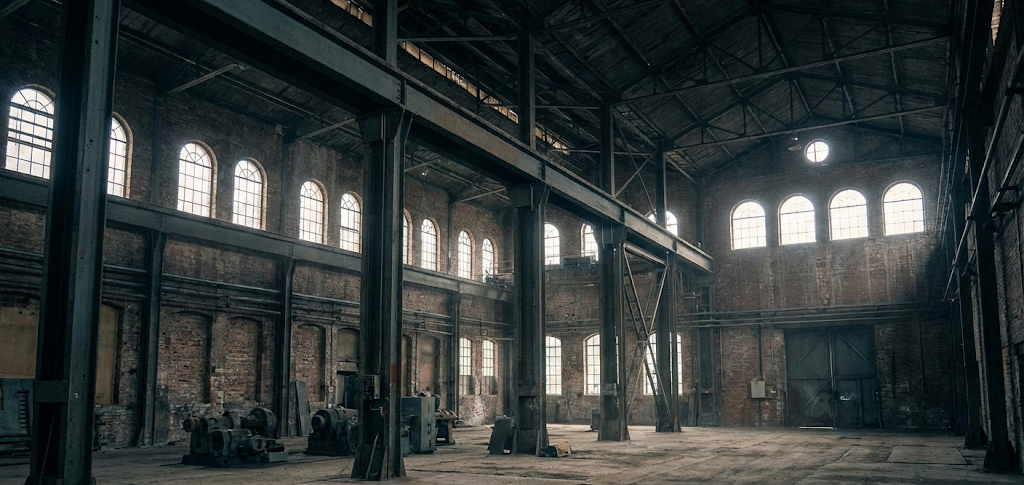
The Silent Transfer of Industrial Strength
Empires are not remembered for the monuments they build, but for the machines they power. Their greatness rises not from speeches or ceremonies, but from the hum of production, the mastery of craft, and the ability to supply both their citizens and their armies without asking permission from rivals. Rome’s legions marched because Roman forges worked. Britain ruled the seas because British factories armed its ships and fueled its fleets.
Industrial strength is the bloodstream of power. When it flows, a nation rises. When it weakens, decline begins long before the first historian gives it name.
America once commanded the industrial world. Its factories created abundance, its shipyards secured freedom, and its assembly lines built the very engines of modern civilization. Yet over time production flowed outward, following the logic Adam Smith described two centuries ago, that capital seeks the most efficient return. For many years that axiom seemed unassailable. Why pay more at home when labor was cheaper abroad and global shipping made distance irrelevant? Why build steel here when steel could be purchased for less from across the ocean?
For a trading nation this logic brings prosperity. For an empire, applied without caution, it brings dependency.
Efficiency is not the highest virtue of a great power. Durability is. The invisible hand allocates resources, but it does not safeguard sovereignty. Nations are not enterprises designed only for profit. They are vessels of security, identity, and continuity. When a country surrenders its factories for the sake of efficiency, it exchanges immediate gain for long term vulnerability. It assumes that peace, cooperation, and open markets will continue indefinitely. History has not been kind to such assumptions.
Britain learned this lesson when its industrial centers dimmed and America’s blazed brighter. Power shifted not by armies, but by the ability to produce. America now stands at a similar crossroads. The knowledge, talent and resources remain. What is uncertain is whether the will remains. Empires that assume they will always have time to rebuild often discover that time has already moved on.
No nation controls its destiny if it depends on others for its material strength. Efficiency can enrich a nation, but only independence preserves it.
What History Whispers
· Capital flows toward efficiency, but power depends on resilience
· Nations that trade production for convenience trade sovereignty for hope
· Renewal requires discipline, foresight, and an understanding that prosperity without security is temporary
The Currency of Empire and the Weight of Obligation
Every empire believes its currency will endure as the measure of value and the instrument of global commerce. Rome believed it as silver flowed from its mints. Britain believed it as the pound sterling traveled the world in the wake of its merchant fleets. The United States believes it now, as nations hold dollars with the same certainty ancient peoples once held gold. Yet history teaches a sober truth. A currency leads the world only while trust is sustained and while the issuing nation remains strong enough to uphold that trust.
The dollar today sits at the center of the world economy. Trade is settled in it. Wealth is stored in it. Nations seek it in moments of crisis. Yet the privilege of a reserve currency is not merely a gift. It is a burden. To supply the world with dollars, the United States must send dollars abroad. It must run deficits so that others may hold its money, and in doing so it must consume more than it produces. The world demands dollars and therefore the nation must provide them, even when doing so slowly weakens the industrial foundation that once made the currency dominant.
This is the Triffin Paradox, first articulated in the twentieth century but practiced since nations first held foreign reserves. To lead the world in money, a nation must supply the world with its money. To supply it, it must run deficits. To run deficits, it must slowly hollow the strength that gave its money value. The mechanism that sustains power quietly erodes the very base upon which that power rests.
Britain experienced this burden as its empire aged. The pound still commanded respect, yet its industrial base weakened, its trade position shifted, and its obligations exceeded its capacity. The final descent began not on battlefields, but in bank ledgers and in the quiet calculations of foreign ministries. Confidence eroded long before the world admitted it aloud.
The United States confronted its own inflection in 1971, when President Nixon closed the gold window and ended the dollar’s convertibility into gold. It was not a moment of collapse. It was a moment of recognition. The commitments of empire had exceeded the reserves that anchored them. The dollar remained dominant, but it now floated not upon gold, but upon faith. The world accepted this because there was no alternative. Yet faith, once untethered from discipline, demands vigilance. It must be renewed by strength, and strength must be earned anew in every generation.
Today the dollar remains supreme. Yet supremacy is not security. The same global system that magnifies American influence requires perpetual proof that the nation remains worthy of its monetary crown. Should confidence falter, the world will not revolt with speeches or declarations. It will simply begin to settle trade elsewhere, little by little, day by day, until the unthinkable becomes the inevitable.
A reserve currency is not simply a unit of account. It is a covenant. It demands that the issuing nation remain the anchor of stability, the guarantor of order, and the steward of discipline. When that discipline falters, trust erodes. And when trust erodes, strength follows.
A nation may borrow money from the world, but it cannot borrow time. Time does not offer extensions. Empires are not granted grace once their currency loses its audience. The world turns quietly, then decisively. And when that turning begins, the empire does not get second chances.
What History Whispers
· The world holds a currency only as long as it holds faith in the nation behind it
· Reserve status is both crown and chain, privilege, and burden
· Confidence fades quietly before it departs suddenly
Debt, Interest, and the Price of Time
Every empire reaches a moment when its greatest adversary is not a foreign foe, but its own arithmetic. Armies may stand ready, borders may remain secure, institutions may still command respect, yet the balance sheet whispers a truth that swords cannot silence. Debt is the most patient conqueror in history. It arrives without armies, it fights without battles, and it defeats nations not with force, but with time.
Rome financed its glory with tribute, but in decline it financed its peace with debasement. Silver disappeared from its coins, trust disappeared from its economy, and discipline disappeared from its government. Britain financed victory in two world wars, yet victory came with a bill that its treasury could no longer sustain. Its empire did not end in defeat. It ended in obligation. The burden of debt outgrew the power that once made repayment certain.
The United States now stands in a similar moment. The sum is known. Nearly thirty-eight trillion dollars in debt and rising, with interest alone consuming more than the Department of Defense. Soon it will surpass every other function of government. Nations can debate policy. They cannot debate mathematics. When a state pays more to service its past than to invest in its future, decline has already begun its work.
Debt is not merely money owed. It is time borrowed. Interest is not merely expense. It is the price of delay. Every year the payment grows larger, not because the nation grows stronger, but because the nation postponed the discipline that preserves strength. A government may choose to delay reform. It may choose to postpone restraint. It may believe the world will always accept its currency, its credit, and its authority. Yet no empire has ever escaped the moment when creditors become historians, and budgets become verdicts.
There comes a point when interest consumes possibility. Roads do not get built. Armies do not modernize. Innovation slows. Promise becomes memory. A nation that once financed expansion finds itself financing only its past. That is how power fades. Not in the fury of war, but in the quiet suffocation of indebted peace.
This is not prophecy. It is precedent. It is the record of every great power that believed time would grant mercy simply because time once did. America still possesses the capacity to restore its balance, to govern with discipline, and to renew the foundation that once made it the engine of the world. Yet capacity is not action. Strength unused is weakness concealed.
Time does not negotiate. It only accumulates interest.
What History Whispers
· Debt is the most patient conqueror, and interest the quietest executioner
· Nations fall when the cost of their past consumes the hope of their future
· Delay is not strategy; it is surrender disguised as confidence
The Fracturing Within
No empire has ever fallen solely because of an external enemy. Great powers do not collapse when foreign armies gather at their borders. They collapse when their citizens cease to believe in a shared destiny. The walls of nations are not breached from without until they have first cracked from within.
Rome did not lose its empire when barbarians arrived. It lost it when Romans could no longer agree on what it meant to be Roman. Civil conflict drained its strength, faction consumed its unity, and loyalty shrank from the nation to the tribe and from the tribe to the self. When a people no longer share a common purpose, the fate of their empire is no longer written by enemies abroad, but by divisions at home.
Britain’s decline also began inwards. Its political class fractured, its working class lost faith in the elite that governed it, and the idea of empire ceased to inspire sacrifice. Once the common identity faded, the empire’s outer borders soon followed.
The United States now faces its own test of cohesion. Not through civil war in the streets, but through a quieter unraveling of civic trust. Citizens no longer see one another as partners in a shared project. Institutions that once commanded respect now provoke suspicion. Public debate has become accusation, and disagreement has become hostility. Politics has ceased to be a contest of ideas and has become a struggle for dominance.
These are not merely cultural disagreements. They are signals that the national narrative is fraying.
In 1831, Alexis de Tocqueville crossed the young republic and marveled that its strength rested not in government institutions, but in its citizens, who were self disciplined, community minded, morally serious, and deeply influenced by religious conviction. He observed that faith served as the first guardian of liberty, shaping character before laws ever did. He warned that democracies seldom fall through sudden tyranny. They decay through a quiet process he called soft despotism, when people slowly surrender responsibility in return for comfort, convenience, and the promise of security administered by distant authorities.
Tocqueville understood that the greatest danger to a free nation is not the ambition of those who govern, but the complacency, moral drift, and spiritual apathy of those who are governed. A republic endures only when its people remember that they are not subjects, but stewards, answerable to conscience, community, and God.
A nation cannot lead the world if it cannot first lead itself. A society cannot defend its values abroad if it cannot agree on its values at home. When unity weakens, discipline fails, and when discipline fails, decline accelerates without battle, without invasion, and without warning.
Empires do not perish when their enemies grow strong. They perish when their people grow strangers to one another. Strength is not the absence of conflict. Strength is the presence of loyalty greater than conflict. When allegiance to faction exceeds allegiance to nation, destiny shifts quietly, and the future becomes shaped not by vision, but by fracture.
America still possesses the capacity for renewal, but capacity unused decays into illusion. It still possesses the memory of unity, the memory of purpose, and the memory of shared pride. But memories alone cannot build a future. Nations endure through conviction, not recollection. What matters now is whether belief in a common American identity can be restored before division becomes accepted as permanent.
History offers no mercy to nations that forget who they are.
What History Whispers
· No empire survives when identity collapses
· Great powers fall inward long before they fall outward
· A nation divided in spirit invites decline without battle
The Fork in the Road: Renewal or Relinquishment
History is not gentle with nations that reach the height of power. It demands that they prove themselves worthy of the place they have attained. Every empire arrives at a fork in the road, where it must choose between renewal and relinquishment, between sacrifice and comfort, between discipline and decay. The moment seldom announces itself. It appears not with drama, but with the quiet realization that the habits which once built strength have given way to habits that consume it.
Rome reached such a moment. Britain reached such a moment. They did not recognize it until the consequences were already flowing like a tide that would not retreat. The United States now stands before the same choice, not because it has been defeated, but because time has demanded an accounting.
The question is not whether America has strength. It does. The question is whether it still has the will to use that strength to renew its foundation. Renewal does not come through slogans, nor through nostalgia, nor through anger at decline. Renewal comes through discipline. It comes through unity of purpose. It comes through a people deciding that the future is still theirs to claim, rather than theirs to mourn.
Relinquishment, by contrast, never arrives as a single decision. It arrives as a collection of small concessions. It arrives when the urgent replaces the important, when comfort replaces effort, when faction replaces nation, and when the present is valued above the future because the future is feared rather than built. Empires do not choose to decline in one moment. They choose it in increments, believing each retreat is temporary, each indulgence harmless, each delay affordable.
Renewal is still possible for the United States. The nation retains resources unmatched in the modern world, from fertile land to unmatched energy capacity, from innovation to capital, from strategic geography to a legacy of freedom that has inspired nations and frightened tyrants. Yet resources alone do not guarantee destiny. Destiny belongs to those who act before necessity becomes crisis.
The world waits to see which path America will choose, for when a nation commands the confidence of the world, its decisions echo far beyond its shores. The choice before the United States is not simply whether it will remain strong. It is whether it will remain worthy of leading.
History grants no nation permanent greatness. It grants only opportunity. What a nation does with that opportunity defines whether it rises anew or fades into memory.
What History Whispers
· Decline is rarely chosen in one act, it is permitted in many moments
· Renewal demands sacrifice before urgency, not after it
· The future belongs to nations that choose effort over comfort
A Closing Reflection: The Cost of Forgetting and the Duty to Remember
As we have seen, the United States faces an existential threat not from foreign armies, but from the same forces that unraveled the greatest empires in history, debt without discipline, power without renewal, and division without memory.
Nations do not endure through strength alone. They endure through memory. They survive not because they once rose to greatness, but because they remember why they rose, and they refuse to forget what must be preserved to rise again. The fall of an empire is not marked by the moment it is defeated. It is marked by the moment it forgets itself.
Rome forgot the virtues that forged its discipline. Britain forgot the responsibilities that accompanied its reach. In both cases the world did not change suddenly. The nations changed first. They drifted from unity to division, from purpose to distraction, from sacrifice to entitlement, and from vigilance to assumption. By the time the consequences appeared, the causes were already beyond recall.
The United States still stands at the point of decision, not at the point of fate. The danger is not that its enemies will overpower it, but that the nation will neglect the duties that once defined it. Prosperity cannot defend a country whose people no longer feel bound to one another. Wealth cannot sustain a society that forgets discipline. Freedom cannot preserve a republic unless those who hold it remain worthy of it.
The lessons are not offered by ideology; they are offered by centuries. No system of government, however noble, survives the loss of civic virtue. No nation, however wealthy, survives the triumph of consumption over character. And no empire, however powerful, survives the moment it trades memory for complacency.
Every generation inherits a choice. It may preserve what was entrusted to it, or it may believe that the achievements of the past guarantee the future. History has never rewarded the latter. Greatness is not inherited. It is renewed. And if it is not renewed, it is lost.
There is still time for the United States, but time is not a gift. It is a test. Those who assume they will always have more soon discover that history does not extend indulgence to those who squander it.
Memory is not nostalgia. Memory is duty. In that duty lies the difference between a nation that endures and a nation that is remembered only in the lessons of fallen empires
What History Whispers
· Nations fall when they forget why they rose
· Memory is not sentiment, it is responsibility
· Greatness survives only where duty is honored
The Work of Renewal
Every empire reaches a moment when survival depends not on its power, but on its willingness to change. The signs are not hidden. They are written in debt that grows faster than wealth, in divisions that grow deeper than purpose, and in leaders who mistake preservation for progress. The pattern has repeated for thousands of years, and the outcome has never changed when arrogance prevails over discipline.
The United States stands at that same threshold. It still possesses the resources to endure, the innovation to lead, and the freedom to restore what has been lost. Yet those gifts will not remain without action. History has no sentiment. It remembers only outcomes. Power does not guarantee survival. Survival belongs to those who confront their decline while correction is still possible.
If the debt continues to rise, if the dollar is stretched beyond confidence, if division hardens until unity becomes impossible, then the pattern will finish itself. The next empire will join the ruins of the last, remembered not for its promise, but for its refusal to act while there was still time. The monuments will stand for a while longer, the markets will function for a few more years, the language will continue to be spoken, but the authority that once ruled the world will have passed quietly into history.
There is only one path to endurance, and it demands correction in five unyielding measures:
· Fiscal discipline: restoring the link between spending and accountability, between power and payment. A nation that cannot balance its obligations cannot command the world’s confidence.
· Industrial re-anchoring: rebuilding the ability to produce what it consumes, securing the supply lines that sustain independence.
· Civic repair: teaching history not as myth but as inheritance, reviving respect for the duties of citizenship, and rewarding integrity rather than outrage.
· Strategic restraint: defending what is vital rather than everywhere, ensuring that ambition never outpaces capacity.
· Moral leadership: placing example above rhetoric, humility above certainty, service above self.
These are not acts of courage. They are conditions for survival. Without them, the United States will follow the same path as every empire that mistook prosperity for permanence. The hour is late, but not final. Empires do not die in a moment. They dissolve through neglect, they fade through comfort, and they vanish through disbelief.
If the nation acts now, it may yet preserve the order it built. If it delays, history will do what history has always done. Those who refuse correction do not get second chances.
What History Whispers
· Great powers fall when correction is postponed beyond redemption
· Renewal demands action before crisis, not after it
· Those who believe they are immune to history are already within its judgment

Sources and Acknowledgments
Data and historical interpretations in Fallen Empires: Lessons for America are drawn from authoritative historical, economic, and philosophical works, as well as official records of the United States government. The author acknowledges the enduring scholarship of historians, economists, and thinkers whose studies illuminate the recurring patterns of power, prosperity, and decline that shape human civilization.
The following sources provided foundational context for the analysis contained in this work.
Historical Decline and Imperial Parallels
· Edward Gibbon, The History of the Decline and Fall of the Roman Empire (1776–1788).
· Paul Kennedy, The Rise and Fall of the Great Powers (1987).
· Niall Ferguson, Empire: How Britain Made the Modern World (2003).
· Arnold Toynbee, A Study of History (1934–1961).
· Peter Heather, The Fall of the Roman Empire: A New History of Rome and the Barbarians (2005).
Economic Fragility and the Reserve Currency System
· Robert Triffin, Gold and the Dollar Crisis: The Future of Convertibility (1960).
· Barry Eichengreen, Exorbitant Privilege: The Rise and Fall of the Dollar and the Future of the International Monetary System (2011).
· Michael Hudson, Super Imperialism: The Economic Strategy of American Empire (1972, revised 2003).
· Ben S. Bernanke, The Global Saving Glut and the U.S. Current Account Deficit (2005).
Debt, Interest, and Fiscal Imbalance
· Congressional Budget Office (CBO), The Budget and Economic Outlook: 2024 to 2034.
· Peter G. Peterson Foundation, Interest Costs Will Soon Be the Largest Federal Expenditure (2024).
· Carmen Reinhart and Kenneth Rogoff, This Time is Different: Eight Centuries of Financial Folly (2009).
Civic Fragmentation and Social Decline
· Alexis de Tocqueville, Democracy in America (1835–1840).
· Robert D. Putnam, Bowling Alone: The Collapse and Revival of American Community (2000).
· Jonathan Haidt, The Righteous Mind: Why Good People Are Divided by Politics and Religion (2012).
· David Brooks, The Road to Character (2015).
Strategic Overstretch and the Imperial Burden
· Andrew Bacevich, The Limits of Power: The End of American Exceptionalism (2008).
· Joseph Nye, Bound to Lead: The Changing Nature of American Power (1990).
· Fareed Zakaria, The Post-American World (2008).
Moral and Philosophical Foundations
· C.S. Lewis, The Abolition of Man (1943).
· Oswald Spengler, The Decline of the West (1918–1922).
· Reinhold Niebuhr, The Irony of American History (1952).
Primary Data and Official References
· U.S. Debt Clock (usdebtclock.org).
· U.S. Treasury, Monthly Statement of the Public Debt.
· Bureau of Economic Analysis (BEA), National Economic Accounts.
· Federal Reserve, Flow of Funds Accounts.
· World Bank and International Monetary Fund (IMF), Global Financial Statistics.